
Accessory Dwelling Units in New Kent County: What Homeowners Should Know
An accessory dwelling unit, or ADU, is a secondary living unit on a residential property, either attached to the main home or standing alone in the yard, with its own kitchen, bathroom, and sleeping area. They go by many names around here: granny flats, in-law suites, backyard cottages. In New Kent County, interest has grown fast as families look for ways to keep aging parents close, give adult kids a place to land, or earn a little rental income on acreage.
The rules are in transition. New Kent County has long handled ADUs through a zoning permit process that emphasized family occupancy and parking, and in 2025 the county Planning Commission advanced a package of amendments that formally defined ADUs and relaxed some accessory-structure limits. Then, on top of local rules, a new statewide Virginia law takes effect July 1, 2027 that will require localities to allow ADUs by right in single-family zoning districts that meet size, setback, and design standards.
This guide walks through all of it, honestly and without legalese spin. I'm a licensed REALTOR®, not an attorney or a zoning official, so the details below are a friendly map, not legal advice. County codes change, so always verify the current rules with the New Kent County planning office before you spend a dollar on design.
The short answer
ADUs are allowed in New Kent County today through a zoning permit process that has emphasized family occupancy, plus parking and size requirements. The county updated its accessory-structure rules in 2025, and a statewide Virginia law under Code of Virginia Section 15.2-2292.4 takes effect July 1, 2027, requiring localities to allow qualifying ADUs by right in single-family districts. Typical ADUs run roughly 250 to 1,200 square feet depending on locality rules.
What exactly is an ADU?
An accessory dwelling unit is a complete, independent living space on the same lot as a single-family home. It has its own living, sleeping, eating, cooking, and sanitation facilities, which is a fancy way of saying it can function as a real home on its own. That last part matters: a finished basement or a bonus room without its own kitchen usually isn't an ADU.
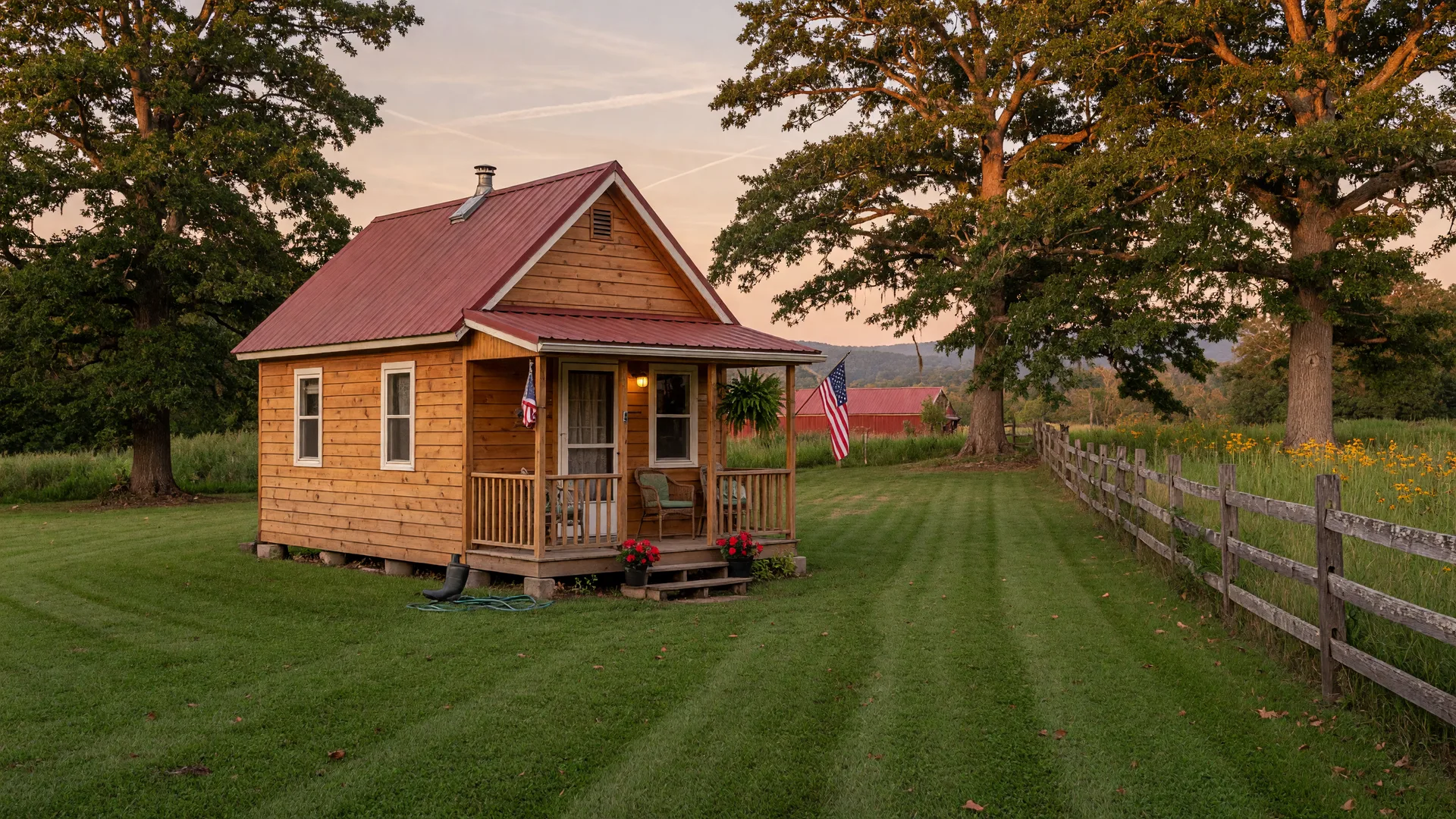
There are two main shapes it takes. An attached ADU shares a wall with the main house, often built over a garage, off a side wing, or as a converted basement or attic with its own entrance. A detached ADU is a separate structure of its own, the "backyard cottage," with clear space between it and the primary home.
Sizes vary with locality rules, but nationally and in Virginia you'll commonly see ADUs between about 250 and 1,200 square feet. The right size for a family is usually driven less by the maximum allowed and more by the lot, the well and septic system, and what the unit will actually be used for.
Common names for the same idea
- Granny flat
- In-law suite
- Backyard cottage
- Secondary suite
- Carriage house or casita
Typical size range
depending on locality rules and the lot
Why New Kent homeowners are asking about ADUs
The homes here sit on generous lots, often an acre or more, which makes the county a natural fit for a second unit. Three reasons keep coming up in my conversations with homeowners:
Multi-generational family
Aging parents who want independence without leaving the family property, adult kids starting careers, or grown children moving home. An ADU keeps everyone close but gives each household its own front door.
Rental income
With Richmond and Williamsburg both close, there's steady demand from nurses, teachers, and young professionals who would rather live in the country than the city. A modest cottage can help a family's budget meaningfully.
Guest space and more
A place for out-of-town guests during winery season, a private office or studio, or a home gym. Many families start with "guest house" in mind and discover a dozen more uses once it exists.
How New Kent County handles ADUs today
ADUs aren't new to New Kent; they've just flown under the radar. The county's current approach centers on a zoning permit process. If your property qualifies and your unit meets the county's standards, you work through the county's planning and zoning review to get approval before you build.
Two themes run through the county's existing rules. The first is family occupancy: the county has traditionally tied ADUs to serving family, historically requiring occupants to be related to the homeowner by blood, marriage, or adoption. The second is parking: you'll need to show adequate off-street parking for the added household rather than relying on on-street space.
Size and design have mattered too. Under the county's existing framework, ADUs have been kept modest in scale, with a common benchmark of no larger than 25% of the primary structure's floor area or 450 square feet, whichever is greater, per county planning materials. As the county updates its code, those specifics bear confirming on your exact property.
The permit path at a glance
Zoning approval through the county's planning process comes first, then building permits for construction, and the unit (including electrical, plumbing, and mechanical work) must meet the Virginia building and fire codes that apply to any dwelling. Water and wastewater approvals come next for well and septic properties. Every step should be confirmed with the county for your specific lot.
The county's 2025 zoning amendments
In 2025 the New Kent County Planning Commission advanced amendments under file PC-0725 to update the county's accessory-structure rules. The package did three things that matter to homeowners:
-
Raised accessory-structure limits
Greater allowances for accessory structures on residential lots, giving homeowners more room to design a workable second unit.
-
Formally added an ADU definition
Put the accessory dwelling unit concept into the county code in plain terms, clarifying what counts and what the expectations are.
-
Exempted farm structures
Created space for bona fide agricultural uses so working farms aren't squeezed by residential accessory limits.
The county adopted that work into its ordinance in June 2025, and it's part of an ongoing evolution of the rules. If you have agricultural ground or a large residential lot, the specifics of the 2025 changes are worth reviewing with the planning office directly.
The new statewide Virginia ADU law
Virginia recently passed a statewide framework for accessory dwelling units under Code of Virginia Section 15.2-2292.4, and it takes effect July 1, 2027. The big headline: starting that date, localities across Virginia must allow ADUs by right in single-family residential zoning districts, meaning a property owner who meets the standards gets approval without a special-use hearing for the ADU itself.
"By right" doesn't mean unlimited, and here's what the law sets up:
By right in single-family districts
Localities must allow ADUs as a permitted accessory use in single-family zoning when the unit meets the locality's size, setback, and design standards.
A real home of its own
The unit must comply with the Statewide Building Code and include its own living, sleeping, eating, cooking, and sanitation facilities.
Permit fee capped at $500
The locality's ADU permit fee is capped at $500 under the new law. Other costs, like building permits and engineering, still apply.
Infrastructure rules still apply
Water, sewer, septic, stormwater, flood zone, and emergency access requirements all still apply. An ADU can't dodge the systems your lot depends on.
One nuance worth knowing: the state framework may not override localities that already adopted their own ADU ordinances before January 1, 2026. New Kent has had local ADU rules in place, so how the state law interacts with the county's own code is exactly the kind of question to put to the county planning office as 2027 gets closer.
Practical things to think through in New Kent
The county's rural character makes a few ADU questions bigger here than they'd be in a suburb. Walk through these before you fall in love with a floor plan:
Well and septic capacity
Many New Kent properties run on private well and septic systems sized for one household. Adding a second dwelling means the well has to serve more people and the drainfield has to handle more wastewater. That usually means a new well or septic design, a bigger system, or a different site for the unit, and it can be the single biggest cost and constraint in a project.
Setbacks and lot size
Where a second structure can sit depends on the zoning district, the lot size, and the setback requirements for accessory buildings. A shade of difference in your property lines can change what's buildable, so a site plan with the county's requirements on it is step one, not step ten.
Parking
The county's rules have emphasized adequate off-street parking for the added household. If your lot and driveway can't comfortably absorb another car or two, that's a practical problem to solve in the design, not after the fact.
Rules change, so verify
New Kent's code was just updated in 2025, and a state law lands in 2027. The honest answer to most ADU questions is "it depends on the code on the day you apply." Verify current specifics with the New Kent County planning and zoning office before designing anything, and get any approvals in writing.
Frequently asked questions about ADUs in New Kent
How big can an ADU be in New Kent?
Across Virginia, ADUs typically range from about 250 to 1,200 square feet depending on locality rules. In New Kent, the county's existing framework has historically kept units modest, with a common benchmark of no larger than 25% of the primary structure's floor area or 450 square feet, whichever is greater. The 2025 amendments and the 2027 state law may shift those limits, so confirm the current standards for your lot with the county.
Do I need a permit to build an ADU in New Kent?
Yes. Today the county's process centers on a zoning permit review through planning and zoning, followed by building permits for construction. The unit must meet the Statewide Building Code and state and local water, sewer, septic, stormwater, flood zone, and emergency access requirements. Always get current requirements from the county before you build.
When does the new Virginia ADU law take effect?
The statewide framework under Code of Virginia Section 15.2-2292.4 takes effect July 1, 2027. It requires localities to allow ADUs by right in single-family zoning districts when the unit meets size, setback, and design standards, caps the locality's ADU permit fee at $500, and still requires water, sewer, septic, stormwater, flood zone, and emergency access compliance.
Can I rent out an ADU in New Kent County?
The county's existing approach has emphasized family occupancy, historically tying ADUs to household members related by blood, marriage, or adoption. The new state framework is built around allowing qualifying units by right where they meet the standards. Whether a rental use is permitted on your property depends on the county's current code, so that's a direct question for planning and zoning.
What does an ADU cost to add in New Kent?
Construction costs vary widely with size, finishes, and site work, and the well and septic work can be a major line item on rural lots. Under the 2027 state law the locality's ADU permit fee is capped at $500, but building permits, engineering, septic design, and utility connections all add to the total. Get itemized estimates from local professionals for your specific site.
Build vs. Buy
Weighing new construction against an existing home in New Kent.
Do You Need Land Before You Build?
Zoning, utilities, and financing for building in the county.
Neighborhoods
Lots with room for a cottage exist in every corner of the county.
New Kent FAQ
Quick answers on living here, taxes, schools, and more.
Want a local read on your property's ADU potential?
I can't make zoning decisions for you, but I can tell you what I've seen work on lots like yours, and point you to the right county office and local pros. Call or text 804-803-1080, email AgentS.Russell@gmail.com, or book a quick chat.
Shannon Russell, REALTOR® · Military Relocation Professional · Better Homes and Gardens Real Estate Base Camp. This guide is informational, not legal or zoning advice.