
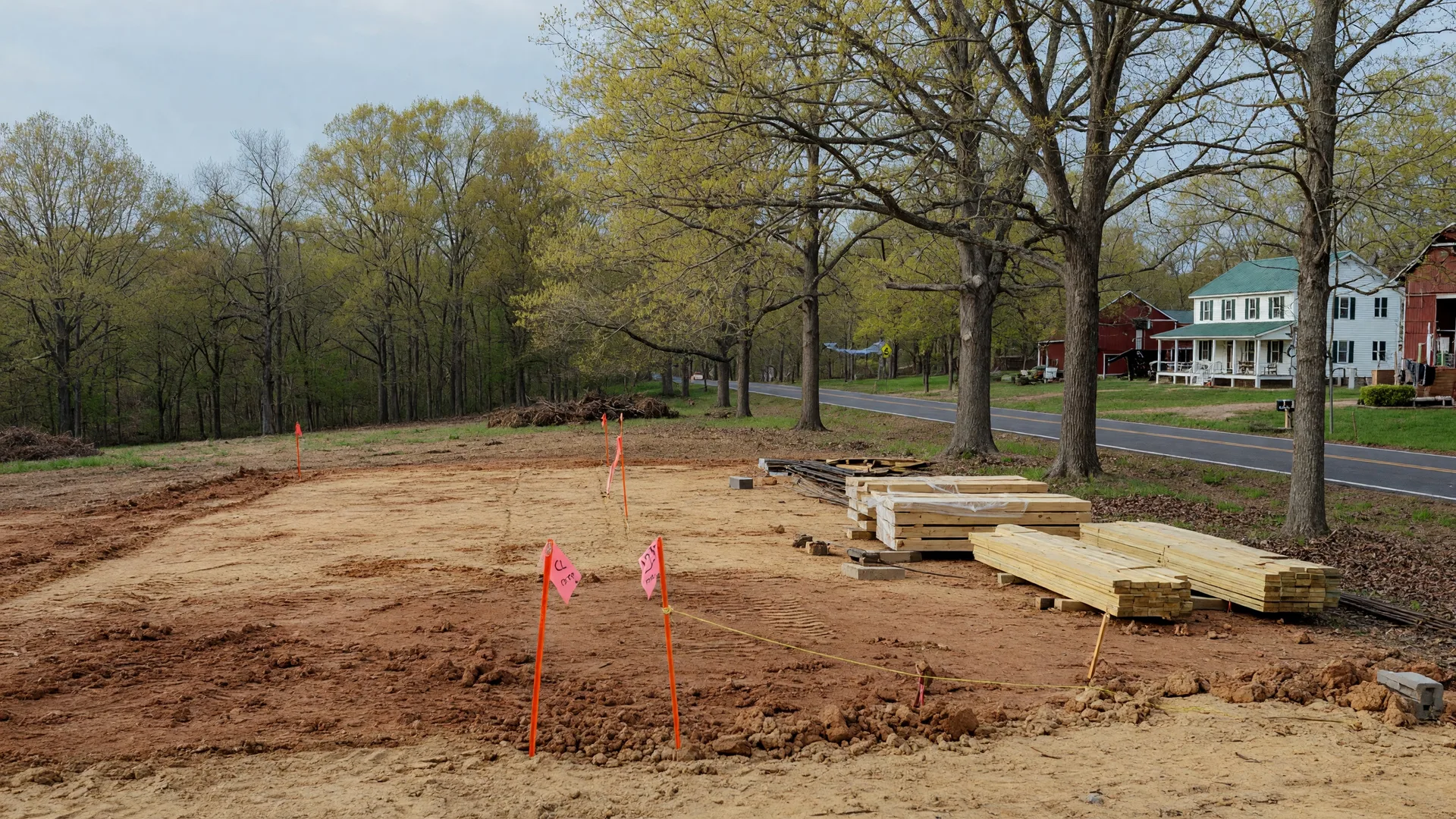
If you're dreaming of a brand-new home in New Kent County — something you designed, on a piece of land you chose — you might be wondering whether you need to own the land before you can even talk to a builder. The short answer is no, you don't have to own land first. But having land (or a plan for it) puts you in a much stronger position.
There are two main paths to building a home in New Kent: buying your own piece of land and then hiring a builder, or buying a lot inside a new construction development where the builder provides the lot as part of the package. Each path has different costs, timelines, and levels of flexibility. Here's what first-time builders in the New Kent area should know.
In this guide
Path 1: Buying Land First
You find a piece of land you love, buy it, and then build your home on it. This is the route that gives you the most control — but it also comes with more steps and responsibility upfront.
The pros
- You choose exactly where you build. Want to be on a quiet rural road in Quinton with five acres of woods? Or closer to the conveniences of Providence Forge? The choice is yours.
- More flexibility with builders. When you own the land, you can shop around for the right builder rather than being limited to a development's approved builder list.
- Full control over the design. No architectural review committee (unless an HOA applies to the land) — you can build the house you actually want.
- Potential long-term value. Raw land in New Kent County has appreciated steadily as the area grows, especially parcels near major commute routes like I-64 and Route 60.
The cons
- You'll need a land loan. Land loans are different from standard mortgages. They typically have higher interest rates, shorter terms (often 2–5 years), and require a larger down payment — usually 20% or more.
- More upfront work. Before you build, you may need to pay for a land survey, perc test (soil percolation test for septic approval), well drilling, utility connections, and zoning or permit applications. These costs add up quickly — budget $5,000–$15,000 or more before you pour a single foundation.
- No guarantees on buildability. The land might look perfect, but until the perc test and soil analysis come back, you won't know for sure whether it can support a septic system and foundation.
- Harder to finance the build. Financing a custom home on land you own often requires a construction-to-permanent loan (a "construction loan"), which has a separate approval process and higher interest rates during the build phase.
Path 2: Building in a New Construction Development
Many communities in and around New Kent offer new construction lots where the builder has already done the hard work — zoning, utilities, roads, and approvals are all taken care of. You buy the lot and the home together as a package.
The pros
- Simplified process. The builder handles everything from permits to utility connections to the final walkthrough. You sign one contract for the lot and the home together.
- Easier financing. Builders typically work with preferred lenders who understand construction financing in that specific development. A single loan covers the lot and the build. You often lock your rate early and don't pay for the land separately.
- Predictable timeline. Developments have established construction schedules, so you'll have a clearer move-in date compared to a custom build on raw land.
- Community amenities. Many New Kent area developments include neighborhood features — walking trails, community ponds, playgrounds, or HOA-maintained common areas that add value.
- No surprise costs. You know the lot price, the house price, and most upgrades upfront. No surveys, perc tests, or well drilling to worry about.
The cons
- Less customization on lot selection. You choose from the lots the developer has platted, not any piece of land in the county. Some lots back up to busy roads or have less privacy.
- Limited builder choice. Most new construction communities work with one or two approved builders. You can't bring in your own.
- Design restrictions. HOA covenants and architectural guidelines limit your choices on exterior finishes, paint colors, fencing, and sometimes even floor plans.
- Lot premiums. Corner lots, waterfront lots, or lots with views cost extra — sometimes $10,000–$40,000 more within the same development.
Which path is right for you?
A good rule of thumb: if you value total control over where and how you live, and you're comfortable managing the extra work and cost, buying land first is the way to go. If you want a smoother, more predictable experience and are happy with a range of good options rather than a perfect custom match, a development community is a better fit.
There's also a middle path: some developers in the New Kent area sell individual lots to custom builders, giving you more flexibility than a production community while still taking care of the utility and zoning work upfront. A local agent can point you to those opportunities.
What to Look for in Land in New Kent
Whether you end up buying raw land or choosing a lot in a development, these are the factors that matter most in New Kent County.
Zoning and building restrictions
Every parcel in New Kent County is zoned for a specific use. Make sure the zoning allows single-family residential construction and check the minimum lot size, setback requirements, and any overlay districts (e.g., scenic highway or conservation areas) that could restrict what you can build.
Utility access
Does the lot have access to public water and sewer? If not, you'll need a well and septic system — and those require approved perc tests and well permits. Also check electric, natural gas, and internet availability. Many rural lots in New Kent rely on private well and septic, and broadband access can vary significantly from one road to the next.
Soil quality and drainage
The soil type affects everything from foundation design to landscaping. A perc test tells you whether the ground can support a septic system. Drainage patterns matter too — you don't want to discover after construction that your backyard turns into a pond every time it rains.
HOA or deed restrictions
Even on raw land, there may be deed restrictions that limit what you can build. If the lot is part of a subdivision with an HOA, review the covenants, conditions, and restrictions (CC&Rs) carefully before you commit. HOA fees add to your monthly carrying costs.
Proximity to schools, commute routes, and military bases
New Kent County is strategically located between Richmond and Williamsburg, with I-64 cutting through the county. If you're a military family, check the drive time to Joint Base Langley-Eustis, Fort Gregg-Adams, or Naval Station Norfolk. For families, knowing which school district the land falls into — New Kent County Public Schools or a neighboring district — can influence both daily life and resale value.
A Quick Note on Financing
Financing a new build is different from buying an existing home. Here's a quick overview of the most common options:
- Land loans: Used when buying raw land without plans to build immediately. Higher rates (often 1–3 points above a standard mortgage), shorter terms (2–5 years), and 20–50% down payment required.
- Construction loans: Short-term loans that cover the cost of building. Interest-only during construction, then you either pay off the balance or convert to a permanent mortgage. Typically require 20% down and a detailed build contract with an approved builder.
- Construction-to-permanent loans: A single loan that covers both the construction phase and the permanent mortgage. You close once, and the loan automatically converts after the certificate of occupancy is issued. This is the most common choice for custom builds.
- Builder financing / preferred lenders: In new construction developments, builders often partner with lenders who offer streamlined construction loans with lower rates. They know the development, the builder's timeline, and the appraised values — which can make the approval process smoother.
If you're eligible for a VA loan, you may be able to use a VA construction-to-permanent loan, which allows for zero down payment on the finished home — but finding a lender experienced with VA construction loans is critical, as they require more documentation and specific builder qualifications.
How Shannon Can Help You Build in New Kent
As a local agent who lives and works in the New Kent area, Shannon Russell knows the land market, the builders, and the permitting landscape better than anyone searching from outside the county. Here's where she adds real value for first-time builders:
- Finding the right lot or community. Shannon works with — and has relationships with — the major new construction developers in New Kent, Quinton, Providence Forge, and Lanexa. She can match you with available lots that fit your budget, timeline, and wish list.
- Connecting you with reputable builders. Not all builders are created equal. Shannon can introduce you to builders with a proven track record in the area, help you review bids, and flag red flags in contracts.
- Navigating zoning and permits. Virginia's permitting process can be confusing, especially for families new to the state. Shannon understands county requirements for New Kent and can help you avoid costly delays.
- Understanding the military relocation angle. As an MRP-certified agent and a military spouse, Shannon knows what matters to relocating service members — from VA construction loan requirements to school zones to commute times to base.
- One-stop guidance. Shannon can recommend surveyors, well drillers, septic contractors, land-use attorneys, and lenders experienced with construction loans in the Richmond and Hampton Roads area.

Shannon Russell
Military Relocation Professional (MRP)
New construction, land, and first-time home buyer specialist serving New Kent County and surrounding areas.
Schedule a ConsultationQuick Checklist for First-Time Builders
- Determine your budget — including land, construction, and contingency (10–15% of build cost)
- Get pre-approved for a construction loan (not just a mortgage pre-approval)
- Check zoning and building restrictions on any lot you're considering
- Order a perc test and well feasibility study before closing on raw land
- Research internet providers — rural addresses vary widely
- Talk to a local agent who knows New Kent's building landscape