
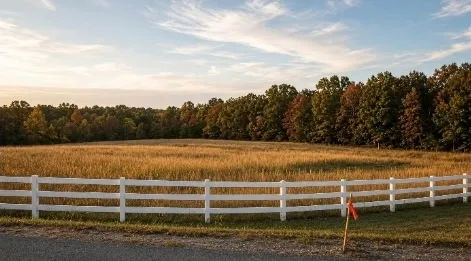
Selling a large parcel is a different process from selling a house, and it helps to understand the acreage market before you list. If you own five acres or more in New Kent County, whether it is farmland, timberland, a horse property, or quiet countryside, this guide covers why the area draws buyers, what drives land value, how to prepare a parcel for sale, and what a realistic timeline looks like.
New Kent County sits between Richmond and Williamsburg, with I-64 running right through it. Rural charm, horse country culture, and a growing wine and farm reputation have made large parcels here increasingly attractive to a wide range of buyers.
In this guide
Why New Kent Land Is in Demand
A few big forces are working in favor of New Kent County landowners.
Location is the headline. With I-64 access and Route 60 crossing the county, acreage here is practical for commuters while still feeling genuinely rural. Buyers can reach Richmond or Williamsburg, or the bases around Hampton Roads, in a reasonable drive.
The equestrian and farm lifestyle draws its own buyers. New Kent is horse country, with pastures, barns, and quiet roads that appeal to riders and hobby farmers, and local wineries add to the same agrarian identity. People who want room for horses or gardens are actively looking here.
Builders and developers are watching too. As the Richmond region grows outward, acreage near utilities and paved roads attracts builders planning new neighborhoods and families who want to buy a larger tract and build on part of it. The result is a wider buyer pool than many landowners expect.
What Drives Land Value
Unlike houses, there is no single number that answers the question "what is my land worth?" Several factors work together.
Location and road frontage
A parcel on a paved road with usable frontage commands more than a landlocked tract reached by a shared easement.
Availability of utilities
Electricity, public water, or sewer at the road makes a parcel far more buildable. If utilities must be brought in, buyers weigh that cost.
Zoning and allowed uses
Current zoning determines what a buyer can do: a single home, additional dwellings, agricultural use, or a business. Restrictions narrow the buyer pool.
Soil and perc for septic
Rural parcels typically rely on well and septic. Passing a perc test determines whether septic can be approved, which affects buildability and value.
Timber value
Mature timber can carry real value, and a professional forester can estimate it. Whether to sell before the land or leave it in place affects price.
Water access
Creek, river, or pond frontage adds a premium, whether the buyer wants fishing, kayaking, or watering livestock.
Can the Land Be Subdivided?
One of the first questions buyers of large parcels ask, and the answer can move the value.
Buyers of large parcels almost always ask whether the land can be subdivided and into how many lots. It is not idle curiosity. The answer can change the value dramatically, because a tract that can be divided opens the door to more buyers, more homes, or a future resale of several parcels.
Whether the land can be divided depends on New Kent County's zoning and subdivision rules, the parcel's size and road frontage, septic and well feasibility, and any conditions the county placed on earlier subdivisions. Some parcels carry stipulations from a previous subdivision, and the county may or may not allow the land to be divided again. Sellers should never assume; the answer has to be researched for each individual property.
Family subdivisions. In Virginia, landowners can sometimes transfer a portion to an immediate family member, such as a child, parent, sibling, or grandchild, outside the standard subdivision process. Often the family member must have built on or used that section for a set number of years before it can be subdivided to them and later sold separately. Rules and timelines vary by county, so confirm with the New Kent County planning office before counting on this option.
What a seller should do. Keep the current plat and survey handy, know the zoning district and minimum lot size, ask the county planning office in writing what subdivision is possible, and check for recorded restrictions or stipulations. An agent experienced with land knows to ask these questions up front, because the answers shape how the property should be marketed and priced.
Preparing Your Parcel for Sale
A little preparation goes a long way in the acreage market. Buyers of large parcels are detail-oriented, and the paperwork is part of the product.
- Get a current survey and marked boundaries. Buyers want to know exactly where the property begins and ends. A current survey with clearly marked corner pins saves time, builds trust, and prevents disputes.
- Sort out title and easements. A clean title is essential, and any recorded easements, such as driveway, utility, or access rights for neighbors, should be documented and disclosed up front.
- Clear or mow access and key areas. First impressions matter even for raw land. Mowing the entrance and keeping building sites open makes the parcel photograph better and easier to walk.
- Know what is included in the sale. Be clear about whether structures, equipment, fencing, timber, or water rights convey with the land. Ambiguity slows deals and creates friction.
How Land Is Priced and Sold
Land is priced by comparing recent sales of similar acreage in the same area, adjusted for frontage, utilities, zoning, soil, timber, and water. An experienced land agent builds a pricing strategy around those comparable acreage sales rather than guessing at a per-acre number.
Buyers come in two broad types. Cash buyers move quickly and often pay a premium for the right parcel. Financed buyers use land loans or construction financing, which adds steps but broadens the market. A buyer who can close cleanly matters more than a slightly higher offer that falls apart.
Timeline realities are honest ones. Land sells more slowly than houses. The right buyers take time to find a parcel, visit it, check soil, utilities, and zoning, and arrange financing. Patience is part of the process; a well-priced parcel marketed to the right buyers will find its buyer, but it may take months, not weeks.
Who Buys Large Parcels
Understanding your likely buyer shapes how the parcel is positioned.
- Builders and developers want acreage near utilities, roads, and growth corridors, with zoning that supports their plans.
- Farmers and agricultural buyers value usable pasture, tillable ground, fencing, and water for livestock.
- Equestrian buyers want horse-friendly land, good soils for footing, barn sites, and quiet roads for riding.
- Investors hold land for appreciation, timber, or future development and weigh the numbers carefully.
- Families wanting space buy acreage for a dream home, horses, gardens, or simply privacy and room to roam.
Why an Agent Who Actually Sells Land Matters
Selling acreage is a specialty. An agent who works with land listings daily knows how to find relevant comparable sales, answer zoning, soil, and utility questions before they scare buyers off, and market a parcel so the right people see it. Land sells through the MLS, signage, and networks of builders and investors, and a land agent brings all of those channels together.
The right agent also helps you avoid common pitfalls: pricing against the wrong comparables, failing to disclose easements, or letting a vague "what comes with the land" conversation derail a contract. With the research done ahead of time, your parcel is presented as ready, professional, and easy to buy.
If you are a landowner considering a sale, the first step is a conversation about your parcel, your goals, and a realistic timeline and price. There is no pressure to rush; good land is worth doing right.
Shannon Russell REALTOR® | MRP, BHGRE Base Camp, Agent.ShannonsHomeList.com, 804-803-1080, Equal Housing.

Shannon Russell
Military Relocation Professional (MRP)
New construction, land, and relocation specialist serving New Kent County and surrounding areas.
Schedule a ConsultationLandowner's Pre-Listing Checklist
- Order a current survey and confirm marked boundary corners
- Gather title documents and any recorded easements
- Mow or clear the entrance, road frontage, and key building sites
- Pull current zoning and confirm allowed uses
- Check utilities available at the road and note septic or perc history
- Decide what conveys: structures, equipment, timber, and water rights