
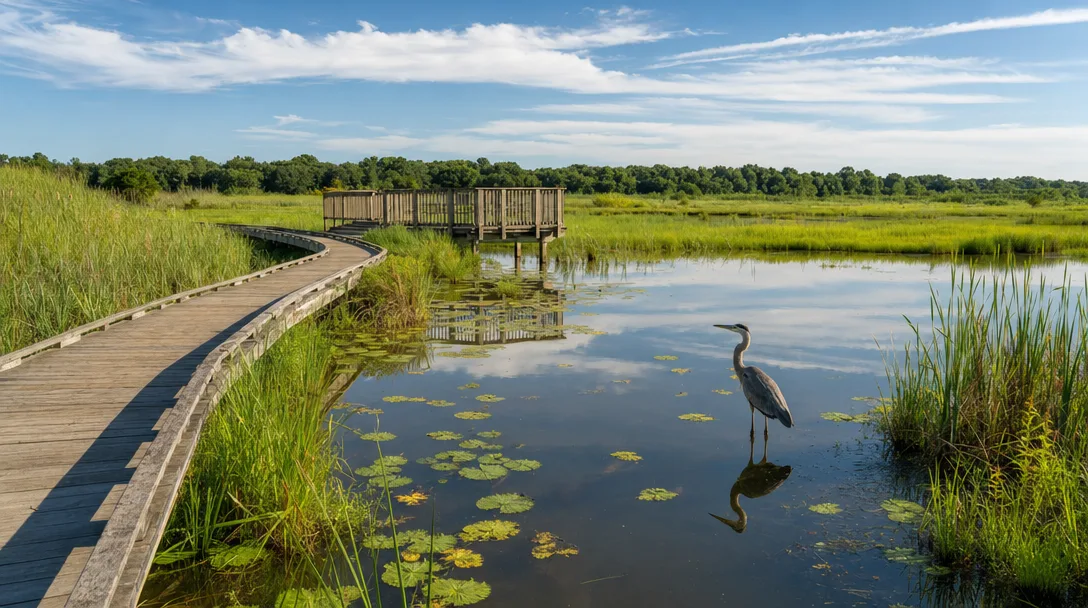
New Kent County sits at the intersection of two major river systems — the Chickahominy and the Pamunkey — and its position between the mountains and the coast makes it a natural corridor for migrating birds. The county is part of the Virginia Birding and Wildlife Trail, and the diversity of habitats packed into this small area is remarkable: freshwater tidal marshes, hardwood forests, pine stands, open fields, and miles of river frontage.
Whether you're a seasoned birder with a life list in the hundreds or a family looking for a peaceful morning walk where you might spot a bald eagle or a great blue heron, New Kent County has a wildlife-viewing experience for you. The best part? Most of these locations are free, uncrowded, and accessible year-round. Here is every birding and wildlife destination worth visiting in and around New Kent County.
Cumberland Marsh Natural Area Preserve
A 1,094-acre freshwater tidal marsh along the Pamunkey River, managed by the Virginia Department of Conservation and Recreation in partnership with The Nature Conservancy. The preserve features an accessible boardwalk through the marsh and a wooden observation deck overlooking the river. This is the premier birding location in New Kent County. Over 100 bird species have been recorded here, and it is part of the Virginia Birding and Wildlife Trail. Bald eagles, osprey, great blue herons, great egrets, and green herons are commonly seen. During migration, the marsh fills with warblers, swallows, and shorebirds. The evening blackbird roost in late summer and early fall is a spectacular sight.
Free access, dawn to dusk. The boardwalk and observation deck are wheelchair accessible. Bring binoculars — the observation deck offers excellent views across the marsh. Early morning (before 9 AM) is the best time for bird activity. Mosquitoes can be intense in summer months — bring bug spray. Late summer and early fall evenings offer the best chance to see the blackbird roost.
Ware Creek Wildlife Management Area
A 2,600-acre WMA along the York River in eastern New Kent County with diverse habitats that support an impressive variety of bird species. Saltmarshes and tidal freshwater marshes provide habitat for waterfowl, marsh birds, and migrating shorebirds. The hardwood forests and interior ponds attract songbirds and wading birds. Bald eagles and osprey are frequently seen soaring over the York River corridor. The WMA is newer and less visited than some other birding spots, offering a more solitary experience for wildlife watchers.
Open dawn to dusk. Free access with a valid hunting license or WMA permit (required for anyone 16+). The tidal marshes require waterproof footwear — trails can be wet. Bring a spotting scope for viewing waterfowl and shorebirds across the marsh. Fall migration (September-October) is the peak season for warbler and shorebird diversity.
Chickahominy Wildlife Management Area
At over 5,200 acres along the Chickahominy River corridor, this WMA provides miles of river frontage and diverse forest habitat for birding and wildlife viewing. The area supports a wide range of woodland and riverine bird species including woodpeckers, warblers, vireos, and raptors. Wild turkeys are commonly seen along forest roads. The river edges attract herons, kingfishers, and occasionally river otters. White-tailed deer are abundant, and the area is excellent for observing woodland wildlife in a natural setting.
Open dawn to dusk, daily. Free access, no permit required. The forest roads provide good walking access and are less crowded than formal parks. Early morning walks along the Chickahominy River produce the best bird activity. Bring water and wear sturdy shoes — the terrain can be uneven. Cell service is spotty in some areas.
York River State Park
A 2,531-acre state park just east of New Kent County along the York River. Over 70 bird species have been recorded in a single morning here, making it one of the premier birding destinations in the region. The Taskinas Creek Trail is particularly popular for birders, winding through marsh and forest habitats. Species include Prothonotary Warbler, Bald Eagles, Ospreys, Red-tailed Hawks, and Barred Owls. The park also offers multi-use trails, a fishing pier, and a visitors center with educational exhibits.
Open daily 8 AM to dusk. Parking fee applies ($7 for Virginia residents). The Taskinas Creek Trail is the best bet for birders — arrive early (before 8:30 AM) for the most active birding. Pick up a bird checklist at the visitors center. Spring and fall migrations are the peak seasons. The park is about 20 minutes from New Kent County via I-64.
Diascund Reservoir
Diascund Reservoir offers multiple vantage points for waterfowl viewing and birding along its wooded shoreline. During spring and fall migration, shorebirds such as yellowlegs, dowitchers, and sandpipers can be seen along the muddy edges. The reservoir attracts a variety of waterfowl in winter, including bufflehead, hooded merganser, and ring-necked duck. Wood ducks nest in the forested coves along the shoreline. The peaceful setting makes it a favorite spot for photographers as well as birders.
Best accessed from Diascund Reservoir Park (free, day use). The fishing pier provides a good vantage point over open water. Early morning is best for waterfowl viewing. Bring a spotting scope for distant birds. The park also has kayak launches if you want to paddle to quieter sections of the reservoir. Winter months (November-February) offer the best waterfowl diversity.
Wahrani Nature Trail
A hidden gem in Lanexa with 104+ bird species recorded on eBird. The multi-loop trails wind through 55 acres of mixed hardwood and pine forest with elevation changes that create varied habitat niches. Woodland species including woodpeckers, nuthatches, chickadees, titmice, and warblers are abundant. The trail is popular with both birders and hikers, and the shaded forest canopy provides comfortable birding even on warm days.
Open daily 6 AM to 8 PM. Free access. The tree canopy provides good shade even in summer. Bird activity is best in early morning (before 9 AM). The trails are well-maintained and easy to walk. Bring binoculars and a field guide — you will see plenty to identify. Download the eBird app before you go to log your sightings.
Tips for Wildlife Viewing in New Kent County
Best Times for Birding in New Kent
Early morning (dawn to 9 AM) is the golden window for bird activity across all locations. Spring migration (April-May) and fall migration (September-October) bring the highest species diversity. Winter (December-February) is best for waterfowl viewing on the reservoir and along the rivers. Late summer evenings offer the spectacular blackbird roost at Cumberland Marsh.
What to Bring
Binoculars (8x or 10x are ideal), a field guide or the Merlin Bird ID app, water, bug spray (essential from April through October), sunscreen, and sturdy walking shoes. A spotting scope is useful for viewing waterfowl across marshes and open water. A camera with a telephoto lens is worth bringing to Cumberland Marsh and York River State Park.
Respecting Wildlife and Habitat
All of these locations are public lands with varying regulations. Stay on designated trails, do not disturb nesting birds, and keep dogs on leashes where required. At Wildlife Management Areas, be aware that hunting seasons run concurrently with birding seasons — wear blaze orange during fall and winter firearms seasons, especially at Chickahominy WMA and Ware Creek WMA.
eBird and Citizen Science
All of these locations are active eBird hotspots. Consider logging your sightings through the eBird app or website — your observations contribute to real-time bird conservation and research data. The eBird app also helps you see what other birders have been spotting recently at each location.
Beyond Birds: Other Wildlife in New Kent
While birding is the headline activity, New Kent County's natural areas support a wide range of other wildlife worth watching for. White-tailed deer are abundant across all WMAs and forested areas — early morning drives along forest roads in the Chickahominy WMA often reveal them feeding along the edges. Wild turkeys are frequently seen in the same areas, especially in spring when gobblers fan their tail feathers in display.
River otters are present along the Chickahominy and Pamunkey Rivers, though they are shy and rarely seen. Look for their tracks along muddy banks in the early morning. Beavers are active in the marsh areas, and their lodges and dams can be spotted from the boardwalk at Cumberland Marsh. The tidal creeks at Ware Creek WMA support a variety of turtles, frogs, and other amphibians.
For anglers who also enjoy wildlife, the Chickahominy River and Lake offer the chance to spot bald eagles and osprey while you fish. The eagle population along the James and Chickahominy Rivers has recovered dramatically in recent decades, and seeing one soar overhead is a common experience on any river outing. The Year of the Trail initiative has also highlighted the connection between Virginia's natural heritage and outdoor recreation.